
Life on Board · July 29, 2026 · 9 min read · by Captain Thierry
Tour des Yoles: Inside Martinique's Biggest Sailing Race
A boat with no keel and no rudder, crews balancing on poles out over the water, and an entire island that stops to watch. Here's why Martinique's Tour des Yoles is so much more than a race.
Every summer, for one week, Martinique moves to the rhythm of a fleet of brightly colored sails. Coastal roads fill up, the finish beaches overflow, and out on the water about a hundred amateur sailors wage a battle unlike anything else in the world.
The Tour des Yoles Rondes, raced aboard the yole, Martinique's traditional keelless sailing boat, isn't just another regatta. It's the biggest public event on the island and the showcase for know-how that goes back three centuries, now recognized by UNESCO.
The 2026 Tour des Yoles at a glance
- 40th edition, from July 26 to August 2, 2026.
- 8 stages and 15 crews competing.
- Stage towns: Sainte-Anne, Le Vauclin, Le Robert, La Trinité, Saint-Pierre, Fort-de-France, Les Anses-d'Arlet, Rivière-Pilote.
- Each stage is named after a pioneering skipper from the very first Tour, back in 1985.
The schedule can change from one day to the next — start locations, times, sea conditions. For up-to-date details, always check the official program published by the Fédération des Yoles Rondes (in French), Martinique's yole racing federation.
What is a yole?
To understand the passion, you first have to understand the boat. And the yole is a gorgeous contradiction: a racing sailboat developed from a fishing skiff, stripped of just about everything that keeps a sailboat stable.
No keel, no centerboard, no rudder
The yole has no ballast, no centerboard and no rudder. The rules are explicit: anything resembling a keel is banned. Under the hull, a simple straight timber — the semelle, or “shoe” — protects the boat when it's beached and slightly limits sideways drift. The big yoles that race under two sails get a removable “false keel” attached beneath it.
Steering is done with a paddle. Notched fittings at the stern, on both port and starboard, let the skipper wedge the paddle in place and steer by sheer arm strength.
In racing trim, the regulation yole is 34.5 ft (10.50 m) long — a length fixed in 1994 — and weighs about 1,760 lb (800 kg). The hull must be solid wood, and it's built without plans: the shipwright works from memory, drawing on know-how passed down by word of mouth, and even follows certain phases of the moon when cutting the timber.
Out on the poles: balance by leverage
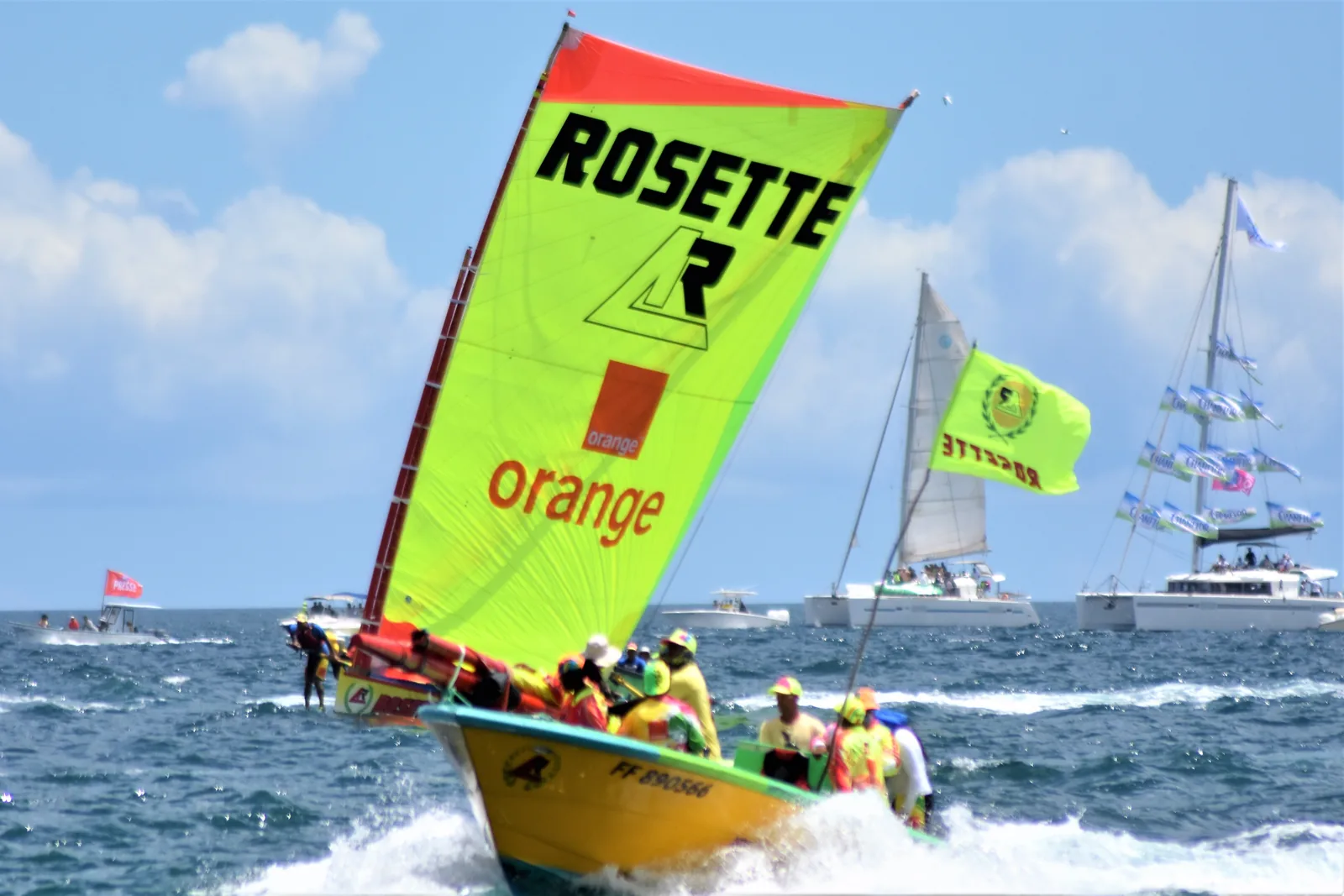
This is the image that has traveled around the world. Since nothing keeps the yole from tipping over, the crew itself is the counterweight.
Crew members climb out of the hull onto long, movable poles — the bois dressés — lashed to the lower rails. It works like a lever: the harder the wind blows, the farther the dresseur (pole sitter) slides out toward the end of the pole, over open water; when the gust dies down, he moves back toward the boat. Nonstop, mid-race, with no harness.
Who does what on board
The crew runs like clockwork, and everyone has a post:
- The patron, or skipper — the one and only boss on board. He handles the paddle, picks the sail plan and decides how many crew to carry depending on the wind.
- One or two assistant skippers and the sheet trimmers, who work the sail.
- The bwa-dressés, out on the poles. Their number is up to the skipper and can reach about ten.
- The first and second “ropes,” rigged to the mast like shrouds when racing under two sails.
- The bailers, who scoop out the water that comes aboard. On a yole, that's no minor detail.
The first dresseur plays a special role: he's nicknamed “the skipper's eyes.” He calls out the gusts, the position of the mark and where the rivals are.
Three centuries of history, from gommier to race boat
The yole was born about 300 years ago, out of a very practical problem. Until then, Martinique's fishermen sailed the gommier, a dugout canoe inherited from the Amerindians and carved from the tree of the same name. But the gommier grew unstable under a big sail — and the tree itself was getting scarce.
The yole took its place: a boat about 21 ft (6.50 m) long, built for fishing but also for carrying people and goods between the towns along the coast.
Racing came later, and it started as a game. Heading home from fishing, skippers challenged each other. Soon they were racing on Sundays, then at village patron-saint festivals. Little by little, between the mid-19th century and the 1970s, the yole went from workboat to racing boat.
1985: the Tour is born
The first round-Martinique yole race was launched in 1985, the brainchild of Georges Brival, an adman and a fisherman's son who passed away in 2024. That first edition was won by Désiré Lamon.
It was also in 1985 that advertising on the sails appeared, as a way to fund cash-strapped clubs. Forty years later, yoles are universally known by their sponsor's name rather than their club's. A yole costs between €15,000 and €20,000, and a club's annual budget runs around €50,000: sponsored sails aren't a marketing detail; they're what keeps the sport alive.
Recognized by UNESCO — but not the way you usually read it
It's a stubborn mix-up, repeated by countless websites: the yole is not on UNESCO's famous “Representative List of the Intangible Cultural Heritage of Humanity.”
Its recognition is actually rarer. In 2020, the yole was added to UNESCO's Register of Good Safeguarding Practices, under the title “The Martinique yole, from construction to sailing practices, a model for heritage safeguarding.” This register doesn't honor a heritage item as such, but the exemplary method used to preserve it — in this case, the way Martinique has kept yole building and sailing alive and passed the know-how down.
Before that, in 2017, the yole had already joined France's National Inventory of Intangible Cultural Heritage.
In other words, Martinique isn't just being praised for having a beautiful boat. It's being held up as an example for keeping that boat alive.
How the yole race works
The race is organized by the Fédération des Yoles Rondes (formerly the Société des Yoles Rondes, itself the successor to an organization founded in 1972). For one week, the fleet circles the island in stages, linking two coastal towns each day.
Standings are based on cumulative time, and the overall leader wears the red jersey. Every stage finish spills over into a party ashore — the famous “after-yoles” — and those celebrations are as much a part of the event as the race itself.
One point is worth stressing: the sport is strictly amateur. The sailors who battle it out for a week in front of tens of thousands of spectators aren't professionals. They're Martinicans who hold down regular jobs the rest of the year.
The stage that sails past Case-Pilote
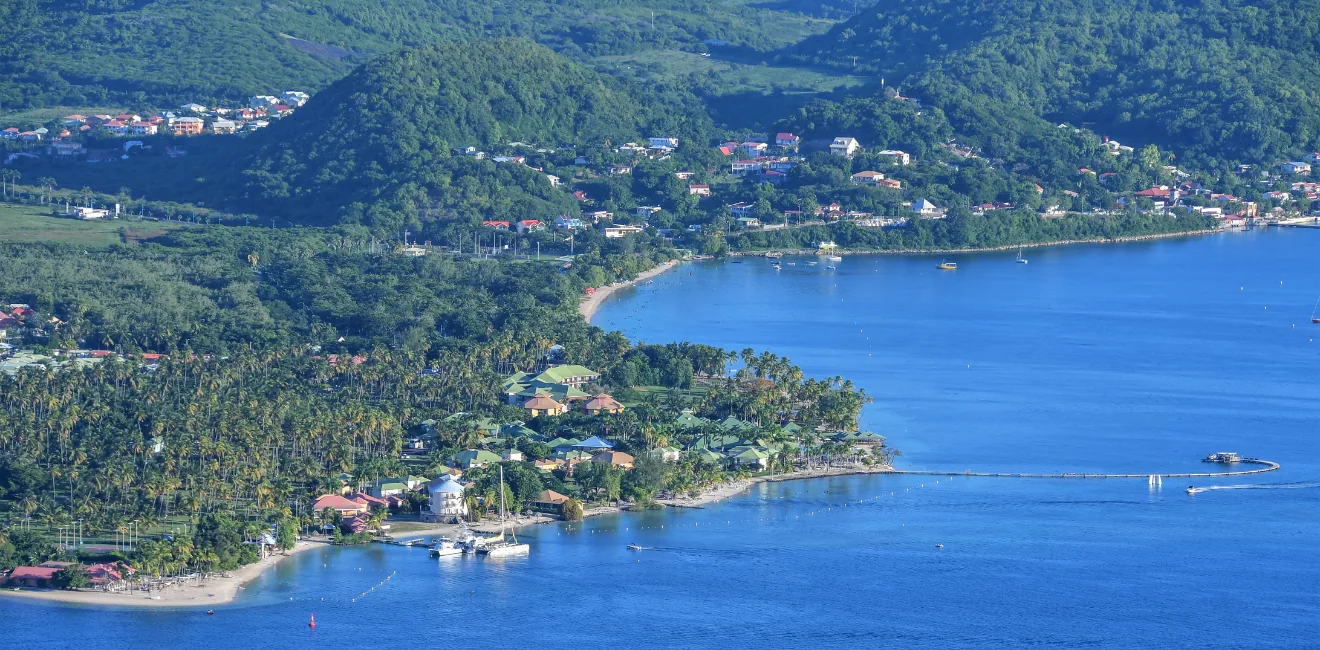
Since we head out from Case-Pilote harbor, on the island's Caribbean (west) coast, there's one stage we look forward to more than any other: the leg down the coast from Saint-Pierre to Fort-de-France.
The course has the yoles round a first mark off the town of Le Carbet, then pass through a mandatory gate — the “Cap Nord exit gate” — set off the southern point of Case-Pilote, before a second mark off Schœlcher and the finish on the beach at La Française, in Fort-de-France.
It's one of the most dreaded stages on the program. It's sailed upwind, along a jagged coastline where gusts come tumbling down from the mornes and valleys without warning. We know this water well: it's exactly where we sail year-round, between Case-Pilote and Saint-Pierre, on our inshore fishing trips and our Martinique boat tours.
Watching the Tour from the water: what's new in 2026
Seeing the yoles go by from a boat is something special — but the 2026 edition marks a regulatory turning point you need to know about before you plan anything.
A brand-new system, set up jointly by marine professionals, the Federation and government agencies, now governs how boats approach the race:
- An official accreditation, issued through the Fédération des Yoles Rondes, is required for any vessel that wants to get close to the race.
- Accredited vessels sail in a zone 650–1,650 ft (200–500 m) from the race and are assigned a spot to watch the stage finishes.
- Accreditation comes with a weekly fee of €250 to €600, depending on the vessel's passenger capacity, paid to the Federation.
- The Direction de la Mer (the maritime affairs office) is coordinating stepped-up inspections before and during the event.
If you're thinking of watching the race from the water, be sure to check first with the Fédération des Yoles Rondes (in French) and with the prefecture, the local government office (in French): they have the final word, and the rules changed this year.
The rest of the time, the sea is wide open. Outside Tour week, you're free to explore the Caribbean coast — and that's exactly what our private boat charters are for.
The crowd, the crew's “third man”
One phrase in the official description of the yole sticks with you: the public is called the crew's “third man.”
It's no figure of speech. On the finish beaches, in the towns, on the rocks and the docks, thousands of people shout, whistle and honk their horns. The crews hear every bit of it. And that roar matters to the race just as much as the wind.
That's probably what makes the Tour so hard to describe to anyone who hasn't experienced it: it's not a sporting event you watch, it's one you take part in.
The highlight of the Martinique summer
If your stay falls during the last week of July, you won't have to go looking for the Tour des Yoles: it will find you. Just follow the cars, the music and the crowds to the next finish beach.
And once the party winds down, the Caribbean coast gets its calm back — the calm we love, between Case-Pilote and Saint-Pierre. Book your boat trip or call Captain Thierry at +596 696 40 56 21: he'll tell you his own take on the Tour, and it's well worth hearing.
Cover photo: “Yole Ronde” by Rehcral, via Wikimedia Commons, licensed under CC BY-SA 4.0 — image resized.
See the Caribbean coast from the water
Boat tours, fishing trips and private charters from Case-Pilote, on the same waters the yoles race through.