Marlin, tuna, wahoo, mahi-mahi, jacks, snapper… Meet the main game fish and reef species you can spot and catch in Martinique's waters, from the deep blue offshore to the Caribbean shoreline.
Where the Caribbean Sea meets the Atlantic, Martinique's waters hold remarkably rich marine life. From the pelagic giants hunting beyond the drop-off to the colorful fish along the shore, this guide to Martinique fish species covers the island's signature catches: what they look like, where and when to find them, and how to catch them. Ready to wet a line? See what fish you can catch on each trip, or go straight to booking your fishing trip in Martinique.
Blue marlin
Makaira nigricansPelagic
Size6.5–13 ft (2–4 m)
SeasonDec. → Mar.
Methodtrolling
The undisputed king of big-game fishing, the blue marlin is the largest billfish in the West Indies. Powerful and spectacular, it goes airborne again and again once hooked, putting up a fight you won't forget. Anglers troll for it beyond the drop-off, off the Caribbean coast. A true trophy fish, it's usually released as part of a responsible catch-and-release approach.
Easy to recognize by its huge dorsal fin, raised like a sail, the sailfish is one of the fastest fish in the ocean, capable of blistering bursts of speed. A tough, acrobatic fighter, it thrills sport anglers with its jumps and runs. Found year-round in Martinique's waters, it's caught by trolling near the schools of baitfish it feeds on.
A large, solitary pelagic with a long, flat, sword-shaped bill, the swordfish roams the deep offshore waters. Powerful and tireless, it puts up a grueling fight. Its firm, flavorful meat makes it one of the most prized table fish. It's usually targeted on a deep drift, often late in the day or at night, when it rises toward the surface to feed.
A true ocean athlete, the yellowfin tuna is easy to recognize by its long, bright yellow fins. It hunts in schools and fights with rare power for its size. Superb eating, whether as sashimi or grilled, it's one of the most popular catches off Martinique. The go-to method is high-speed trolling, often under the birds that give away its feeding frenzies.
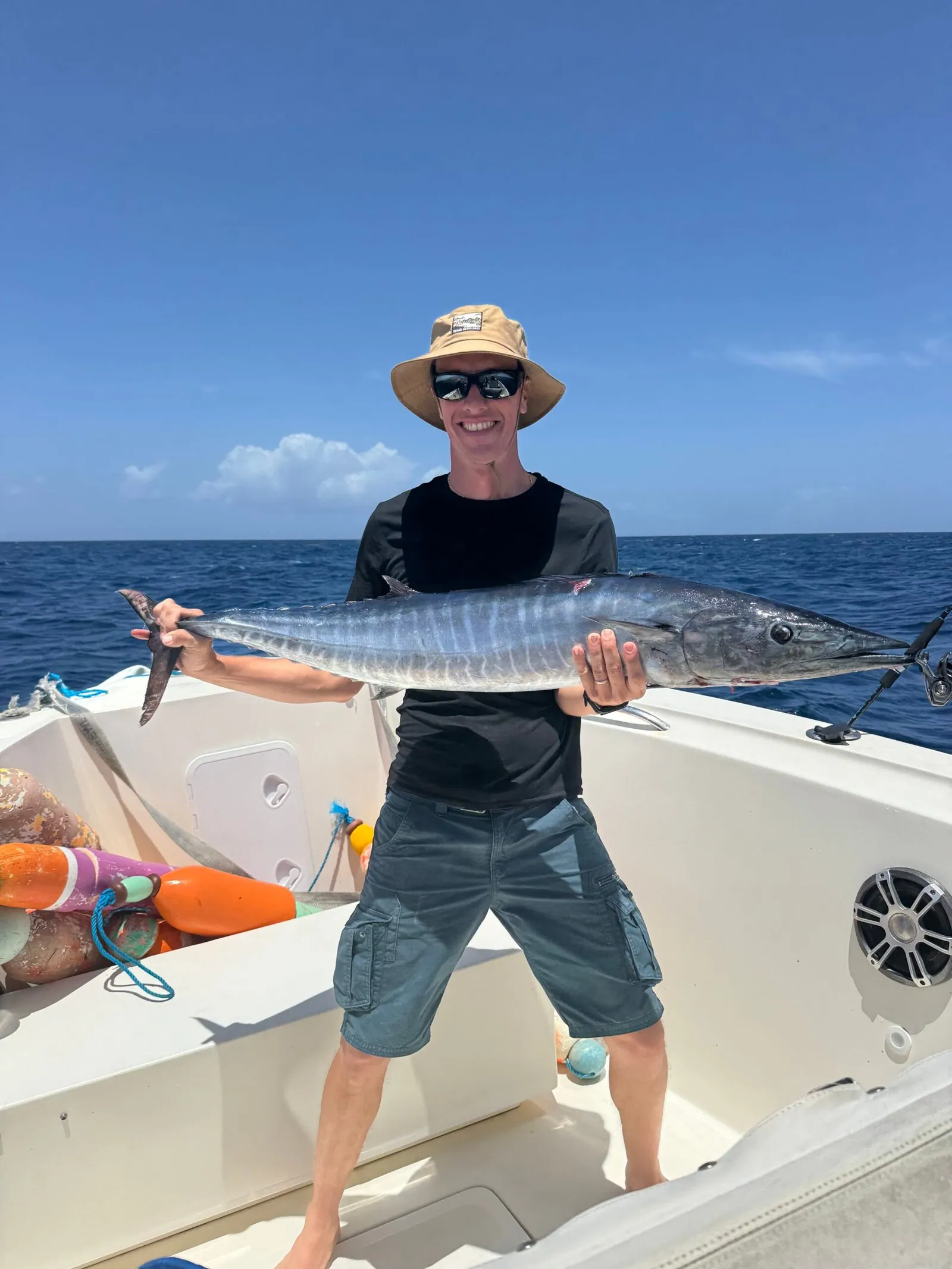
Known in Martinique as thazard, the wahoo is a formidable sprinter: one of the fastest fish in the world, with explosive runs that make the reel scream. Sleek and muscular, it's caught by high-speed trolling over drop-offs and wrecks. Its fine white fillets are delicious pan-fried. It's one of Martinique's most sought-after catches, both inshore and offshore.
Ablaze with color (gold, green and electric blue), the mahi-mahi, or dorado, is as beautiful as it is hard-fighting. It grows fast, hunts near the surface around floating objects and jumps again and again once hooked. Its delicate, tender flesh is a favorite at the table, which makes it the ideal catch: as much fun to fight as it is to eat. You'll find it often off the Caribbean coast.
A feisty member of the tuna family with a striped back, the little tunny (bonite or thonine to locals) hunts in tight schools near the surface, often under birds. Pound for pound a tough fighter, it's an easy, fun catch and the perfect introduction to pelagic fishing. It also makes excellent live bait or cut bait for bigger predators. Catch it on light trolling tackle or by casting into breaking schools.
Long, silver and armed with an impressive set of jaws, the barracuda is an ambush hunter, curious and lightning-fast on the attack. You'll find it along drop-offs as well as close to shore and around wrecks. Its brutal strikes and powerful runs make it a popular sport fish. A word of caution: big ones can carry ciguatera (a type of fish poisoning) and are usually released.
Quick and tireless, the jack is the ultimate inshore brawler. It hunts in small groups along rocky shorelines, through channels and around structure. It hits hard, and its angry runs deliver a real thrill, even a few yards from shore. It's an ideal family catch: easy to hook and always up for a fight.
Bright red and iconic across the West Indies, the snapper (called sarde in Martinique) lives near hard bottom, drop-offs and wrecks. Wary by nature, it's usually caught bottom fishing with bait, with the best bites at dawn and after dark. Its firm, white, flavorful fillets make it one of the most sought-after fish for Creole cooking.
A sleek snapper with a silvery body and a bright yellow stripe that runs all the way to the tail, this species cruises in schools over seagrass beds and reefs. Less skittish than its red cousin, it keeps the action steady, which makes it perfect for beginners, and its delicate flesh is a favorite. It's a sure bet on any inshore trip in Martinique.
A deep-bodied, silvery bottom fish, the porgy hangs out over sandy and coral patches close to shore. A digger, it feeds on crustaceans and shellfish, crushing them with its powerful teeth. It fights hard when you set the hook, and its fine, delicate flesh is especially good grilled. A classic, tasty inshore catch.
Known locally as sorbe, the mutton snapper is one of the reddish inshore species that make bottom fishing in Martinique so rewarding. It holds close to structure and drop-offs, where it's caught bottom fishing with natural bait. A regular on family trips, it ends up in the fish box alongside snapper and porgy, bound for the Creole table.
With its flat, oval body and small mouth full of strong teeth, the triggerfish (locally called bourse) prowls around reefs and wrecks. Curious and stubborn, it punches above its weight and is a crafty bait thief. Its white meat is excellent, too. An unusual, fun catch from the inshore reefs.
A smaller cousin of the barracuda, the guaguanche (known in Martinique as bécune) hunts by sight along the coast and in sheltered bays. Fast and greedy, it readily hits shiny lures, which makes it a fun target for casting. Its quick, aggressive strikes delight seasoned anglers and beginners alike. It's common and easy to find along Martinique's shoreline.
A small member of the jack family with oversized eyes, the bigeye scad (coulirou in Martinique) lives in dense schools near the surface. Caught on a sabiki rig (a string of small hooks), it's a hit with kids because the action is nonstop. It's also the go-to live bait for tempting big predators. Grilled or fried, it earns its place in West Indian cooking.
Long and pencil-thin, the needlefish (balaou to locals) skims the surface and leaps clear of the water when it attacks. Its pointed beak and greenish bones make it easy to identify. Quick and acrobatic, it offers fun surface fishing on light lures. It's common inshore and often turns up on family trips.
Stocky and powerful, the grouper (locally called vieille) lurks in rocky crevices and wrecks, and the moment it's hooked it dives for its hole: a test of strength you can't afford to lose. Its white fillets are highly prized. A species to protect, it's fished within size limits and seasons so populations can replenish.
Small schooling fish of reefs and seagrass beds, grunts (gorettes, as they're called here) get their name from the grunting sound they make with their throat teeth. Striped in yellow and blue, they readily take bait fished on the bottom and keep the bites coming. Beginner-friendly and tasty, they're a West Indian inshore classic.
Beautiful but dangerous, the lionfish is an invasive species from the Indo-Pacific that is spreading across West Indian reefs at the expense of native marine life. Its venomous spines call for caution. Catching it (mostly by spearfishing) is strongly encouraged to protect the ecosystem, and the good news is that its white flesh is excellent. Every lionfish caught is a win for Martinique's biodiversity.
Sources and further reading: each profile links to its entry on DORIS (FFESSM) (in French) or FishBase, two leading scientific databases on marine species. The sizes and seasons shown are specific to fishing in Martinique and vary with conditions.
Ready to reel in these Martinique fish species?
Captain Thierry takes you to the best spots, from big-game fishing offshore to family-friendly inshore trips. All gear provided, no experience needed.