
Plan Your Trip · July 18, 2026 · 6 min read · by Captain Thierry
Sargassum in Martinique: Beaches, Season and the Coast That Stays Clear
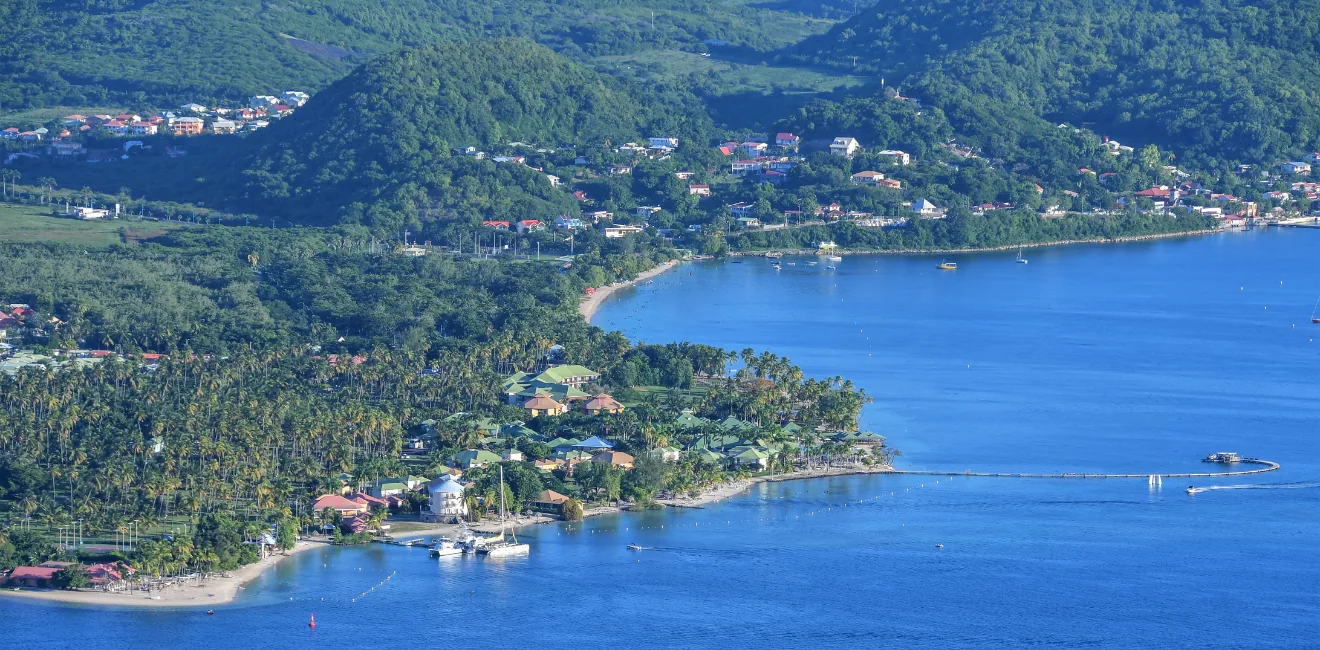
Which beaches get hit, when, and why the Caribbean coast stays clear — the very coast where our boat trips set out from Case-Pilote.
You're planning a vacation, and one worry keeps nagging at you: sargassum in Martinique. This brown seaweed sometimes washes up on the shore and gives off an unpleasant smell. Is it enough to ruin your trip? Not necessarily.
In Martinique, everything depends on which coast you spread your towel on — and where you board the boat. The good news: the Caribbean coast, on the west side of the island, is largely spared. That's exactly where our boat trips depart, from Case-Pilote.
In this practical guide, we answer the real questions: which beaches are affected, when, why some coasts stay clear, and how to check conditions before you head out.
Sargassum in Martinique today (September 2026)
We're at the tail end of the peak season: sargassum landings happen mostly from April to October, with the heaviest arrivals between May and August. So in September, occasional landings are still possible on the Atlantic coast (Le Robert, Le François, Le Vauclin…), while the Caribbean coast — Case-Pilote, Le Carbet, Anses d'Arlet — stays largely clear, just as it does the rest of the year.
Since conditions on a beach can change within 24 to 48 hours, the smart move is to check today's satellite map — or ask the captain, who is out on the Caribbean coast every day. Section updated September 3, 2026.
What is sargassum and where does it come from?
Sargassum is a brown seaweed that floats in large mats on the surface of the Atlantic Ocean. Carried by currents and winds, it drifts across the Atlantic from a vast area between Africa and Brazil before reaching the Lesser Antilles, the island chain Martinique belongs to.
Out at sea, it plays a useful role: it shelters small marine life. The problem starts when it washes ashore. As it piles up on the beach, it rots and releases hydrogen sulfide (H2S), the gas behind that infamous rotten-egg smell. It's nothing a well-planned trip can't handle, as long as you know where to go.
Which beaches in Martinique are affected by sargassum?
The island's geography holds the answer. The Atlantic (east) coast faces the ocean currents head-on, so it's the first to receive sargassum.
The most exposed areas (east coast)
- Le Robert and Le François, on the Atlantic side.
- Le Vauclin and Le Marin, in the southeast.
- Sainte-Anne, on its Atlantic side (the east-facing beaches).
According to local travel guides that track the phenomenon, these windward-coast beaches are the first to see sargassum landings (in French). Nothing permanent, though: the scale varies a lot from one year — and one week — to the next.
Why is the Caribbean coast spared?
Unlike the Atlantic side, the Caribbean (west) coast faces the Caribbean Sea, sheltered from the big Atlantic currents. As a result, it stays mostly free of sargassum.
Beaches that usually stay clean (west coast)
Caribbean-coast beaches remain the most reliable (in French): Anses d'Arlet, Le Diamant, Le Carbet, Saint-Pierre and Case-Pilote. Expect clear, calm water — and, most of the time, not a single strand of seaweed.
Why our boat trips have the edge
That's the beauty of our location: we leave from Case-Pilote harbor, on the Caribbean coast. Whether you choose a boat tour, a family inshore fishing trip or a snorkeling trip with sea turtles at Anses d'Arlet, you'll be out on the island's best-preserved waters. After all, the best way to enjoy a clean sea is from a boat.

When is sargassum season in Martinique?
It's a seasonal phenomenon. Landings happen mainly from April to October, peaking between May and August, when currents and warm temperatures push the seaweed toward the island.
On the flip side, from December to March, beaches are generally clean all around the island — which lines up with the dry season, the most popular time with travelers. Come during the high tourist season and the odds are on your side.
Is sargassum dangerous to your health?
Freshly arrived sargassum isn't harmful; the trouble starts when it decomposes. As it breaks down on the shore, it releases hydrogen sulfide and ammonia, which cause the telltale smell.
For the vast majority of visitors, it's nothing more than an unpleasant smell. More sensitive people (those with asthma, pregnant women and young children) should keep away from areas with heavy landings, where the air can become irritating.
The rule is simple: don't linger near piles of rotting seaweed, and stick to clean beaches — usually those on the Caribbean coast. Out on the water, a short way offshore, it's a non-issue: the air is fresh and the water crystal clear.
How to check beach conditions in real time
Things can change within 24 to 48 hours depending on wind and currents: a beach that's clean one morning can see a landing the next day. That's why it pays to check right before you go.
- Check the sargassum satellite tracking maps, which are updated regularly.
- Follow the landing bulletins issued by local authorities: Météo-France (France's national weather service) and the prefecture (the local government office).
- Ask locals and people who work on the water: nobody knows the day's conditions better than a local captain.
At Carib Évasion, we're out on the Caribbean coast every day, so feel free to call us for current conditions.
Our tips to avoid sargassum surprises
In short, a few simple habits are all it takes to enjoy Martinique's clear water:
- Favor the Caribbean coast (west) for swimming and water activities: Anses d'Arlet, Le Diamant, Le Carbet, Saint-Pierre, Case-Pilote.
- Travel between December and April if you can: it's the cleanest season… and the most pleasant time to explore the island.
- Check the tracking maps the day before each trip and adjust your plans day by day.
- Take to the sea: on a boat, you leave the exposed beaches behind and head for the island's most beautiful unspoiled spots.
A great vacation, far from the sargassum
Sargassum is part of life in the West Indies, but it shouldn't dictate your vacation. Stick to the Caribbean coast, check the day's conditions, and you'll find the turquoise-water Martinique you've been dreaming of.
And to see this unspoiled coast at its best, nothing beats a trip on the water. Book a boat tour or fishing trip from Case-Pilote, or contact Captain Thierry at +596 696 40 56 21 or on WhatsApp for current conditions.
Head for the clear water of the Caribbean coast
Boat tours, snorkeling and inshore fishing from Case-Pilote, on the island's best-preserved coast.