
Tips · July 29, 2026 · 7 min read · by Captain Thierry
How to Avoid Seasickness on a Boat: The Captain's Guide
“I'd love to, but I'm afraid I'll get sick.” It's the line we hear most often before a boat trip. Here's what really works — and why it's almost never a reason to stay ashore.
In twenty-five years of sailing out of Case-Pilote, Captain Thierry has welcomed hundreds of people aboard who were convinced they “just can't handle boats.” The vast majority stepped back onto the dock with a smile, without the slightest problem.
Seasickness isn't something you just have to live with. It's your body's natural reaction, and knowing how to avoid seasickness on a boat comes down to a few simple rules — plus choosing a trip that suits your sea legs.
This guide pulls together what we've been telling our passengers for years: what causes seasickness, the habits that actually help, the classic mistakes and how to choose your trip if you're nervous.
What causes seasickness?
Seasickness — a form of motion sickness — comes from a mismatch between your senses. Your inner ear, which controls your balance, feels the boat rolling and pitching. But your eyes, if you're staring at the deck or the inside of the cabin, see a scene that isn't moving.
Your brain gets two conflicting messages and triggers a defense response: nausea, cold sweats, sudden fatigue, yawning. Nothing serious, but definitely unpleasant.
The good news fits in one sentence: get your senses back in sync and the symptoms fade. That's exactly what all the tips below are designed to do.
How to avoid seasickness on a boat: 8 habits that really work
1. Stay outside in the fresh air
This is by far the most effective tip. Fresh air, wind on your face and natural light help your body find its balance again. Shutting yourself inside to “rest,” by contrast, is the surest way to make things worse.
2. Keep your eyes on the horizon or the coast
Find a fixed point in the distance: the horizon, Mount Pelée, the outline of the coast. Your eyes then confirm the motion your inner ear is feeling, and the conflict settles down. In Martinique, you're lucky enough to sail with dramatic mountain scenery always in sight.
3. Sit in the middle of the boat
Not every part of the boat moves the same way. The bow (front) pounds the most and the stern (back) moves around too: the middle of the boat is the most stable spot. If you're prone to seasickness, grab a seat there rather than standing.
4. Eat light — but do eat
Heading out on an empty stomach is a bad idea, because it makes nausea more likely. Have a simple breakfast: bread, a banana, something starchy. But skip greasy or very sugary food, and go easy on the coffee right before you board.
5. No alcohol the night before or that morning
The dehydration and fatigue that come with alcohol multiply the risk. The ti' punch (Martinique's rum cocktail) is for later, once the lines are reeled in and the boat is tied up — which is when it tastes best anyway.
6. Stay hydrated
Sip water throughout the trip. Under the Caribbean sun, dehydration sets in fast and makes every symptom worse. Cold drinks are included on all our trips, so help yourself.
7. Put your phone away
Reading messages, scrolling, checking a map, lining up a shot for ages: all of these lock your eyes onto a nearby object that moves with the boat. It's the perfect recipe for nausea. Photos, yes — but keep them quick, then look up again.
8. Keep your hands busy
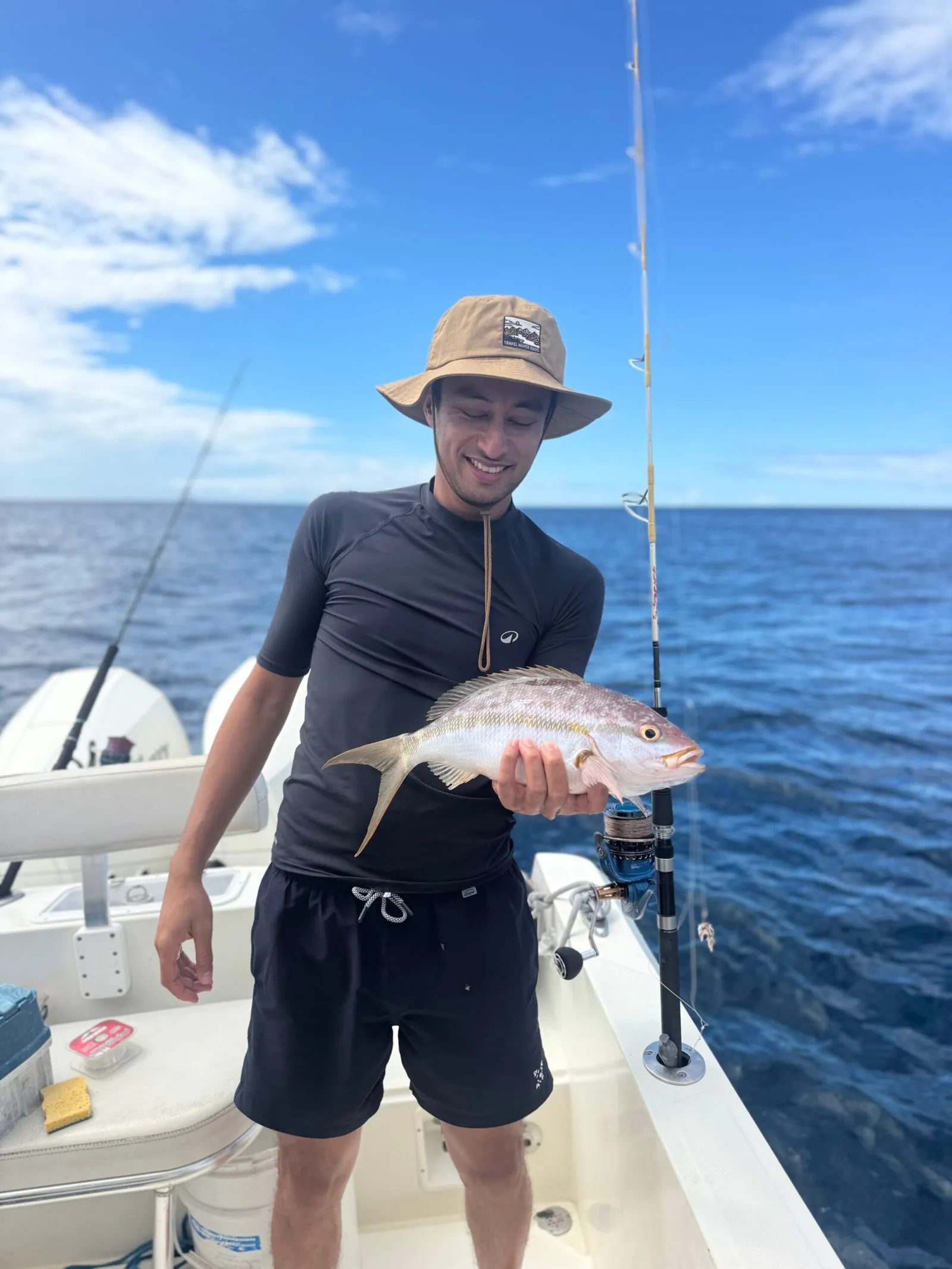
It's a trick anglers know well: when you're busy, you stop thinking about your stomach. Holding a rod, watching a line, waiting for a bite — your attention goes outward and seasickness never gets a foothold. Many of our nervous passengers forget their worries completely at the very first strike.
What about medication?
Pharmacies carry motion sickness remedies, which are generally taken before you board, not once the symptoms have set in. Some cause drowsiness, others don't.
We're not doctors, and every situation is different: ask your pharmacist or doctor for advice, especially for children, during pregnancy or if you're already taking medication. Only they can point you in the right direction.
As for gentler remedies, many sailors swear by ginger (in tea, as candy or crystallized) and by acupressure wristbands. Scientific opinion is divided, but they're risk-free: if they reassure you and work for you, all the better.
Which trip should you choose if you're not sure of your sea legs?
It's the topic that comes up most on the phone, and it's usually what makes all the difference. When it comes to comfort, not all trips are created equal.
The Caribbean coast works in your favor
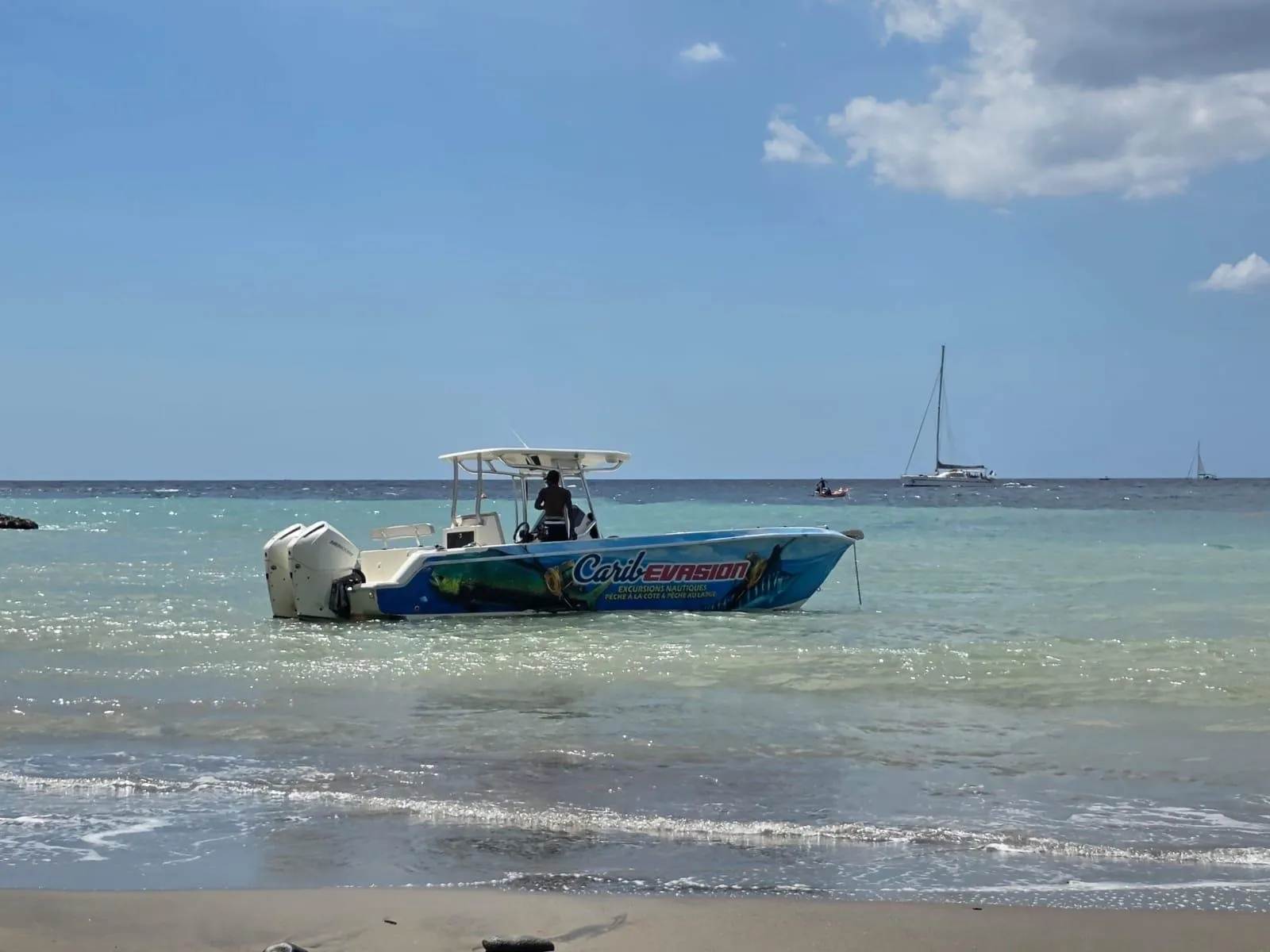
We depart from Case-Pilote harbor, on the Caribbean coast (the west side of the island). This side is sheltered from the trade winds and the Atlantic swells: the sea is usually calm, especially in the morning. That's a big advantage over the Atlantic coast, where the sea is much rougher.
Inshore trips: the most comfortable option
If you're really worried, start with an inshore fishing trip. We cruise along the coastline between Case-Pilote and Saint-Pierre: the sea is calmer, the shore is always in view and you're never far from land. It's also the trip open to kids ages 5 and up — a good sign of how comfortable it is.
Our boat tours around Martinique and our snorkeling trip with sea turtles also stay close to the coast, with stops at calm anchorages.
Deep-sea fishing: more demanding, but rarely a problem
Deep-sea fishing takes place offshore, beyond the drop-off, on a 5-hour trip, and there's more swell out there. That said, seasickness on a fishing trip is rarely an issue, even offshore: most of our anglers — complete beginners included — get through it without any trouble, precisely because the action keeps both mind and body busy.
If in doubt, just talk to the captain before you book: he knows the day's conditions and will tell you honestly what he thinks. That's one of the perks of heading out with a local pro.
What to do if seasickness sets in anyway
It happens, and it's no big deal. Here's what to do, in order:
- Tell the captain — he's used to it, and he can adjust the speed or heading, or find calmer, more sheltered water.
- Get out into the fresh air and sit in the middle of the boat, facing forward.
- Keep your eyes on the horizon and breathe slowly and deeply.
- Sip a little cool water.
- Lie flat on your back if the boat is stopped: the sensations ease a lot in that position.
- If you need to throw up, do it on the leeward (downwind) side — the captain will show you which side that is. It's unpleasant, but you'll often feel much better afterward.
And remember, your body adapts: after a few hours, or on a second trip, most people don't feel a thing.
The bottom line
Seasickness shouldn't keep you from the best way to discover Martinique. Fresh air, eyes on the horizon, middle of the boat, a light meal, no alcohol, phone away: in nearly every case, these six habits are all you need.
And if you're still nervous, start small: an inshore trip on calm water, with the coast always in sight. That's often when people discover they have much better sea legs than they thought.
Have a question about the day's conditions or the best trip for your family? Call Captain Thierry at +596 696 40 56 21 or message us on WhatsApp — he always gives you a straight answer. For everything else, our first fishing trip checklist tells you exactly what to bring.
Calm water, coast in sight
Inshore fishing trips and boat tours from Case-Pilote, on the most sheltered side of the island.